
You'll learn to
- Name our best live Collect sites and what each one shows
- Name our competitors and how we're different
- Answer the questions prospects push back with
Manawatū Heritage
- Palmerston North City Library
- On Collect since 2017
- The public adds photos and stories
- English and te reo Māori
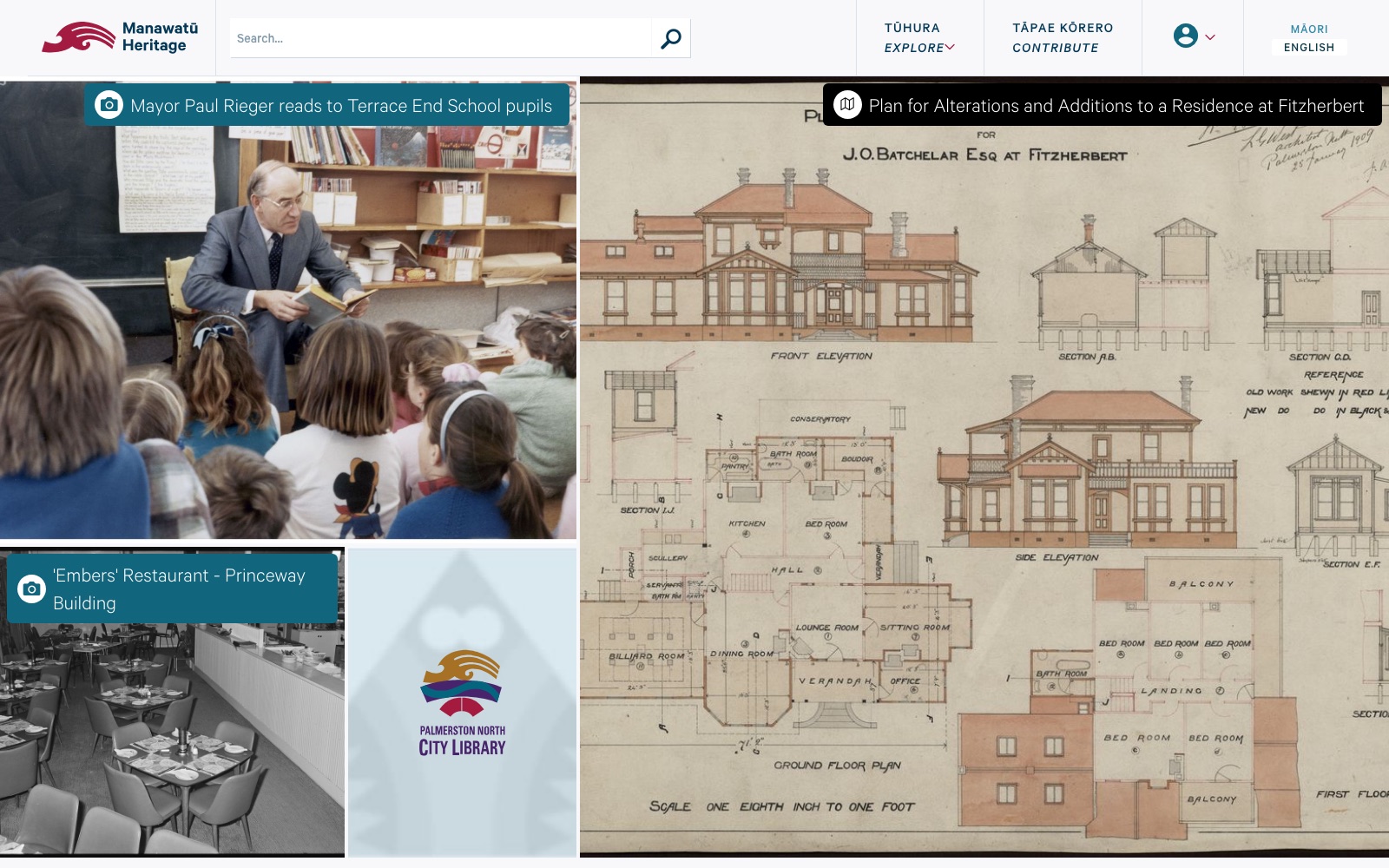
Manawatū Heritage, at manawatuheritage.pncc.govt.nz, is our flagship. It's run by Palmerston North City Library's heritage team and holds the city's archives, photographs, books and postcards.
Show a prospect three things. Search for a street or a family name and open a record with a fuzzy date. Open Contribute, where the public uploads photos or writes stories for the heritage team to review. Then switch the site into te reo Māori.
Palmerston North keep investing in it. They've paid for authority files and an archives management module on top of their plan. A second site, for the city archives, launches at the end of October 2026. Much of what Collect does today, they asked for first.
The council also has a STQRY app, Manawatū Heritage Tours. Its stories are built in Builder, because Collect content can't appear in an app or on a kiosk yet.
More live examples
- Kete Horowhenua, a council archive
- Feilding Heritage, a district library
- NSW Supreme Court, alongside its app
- Friends of Minidoka, launching soon
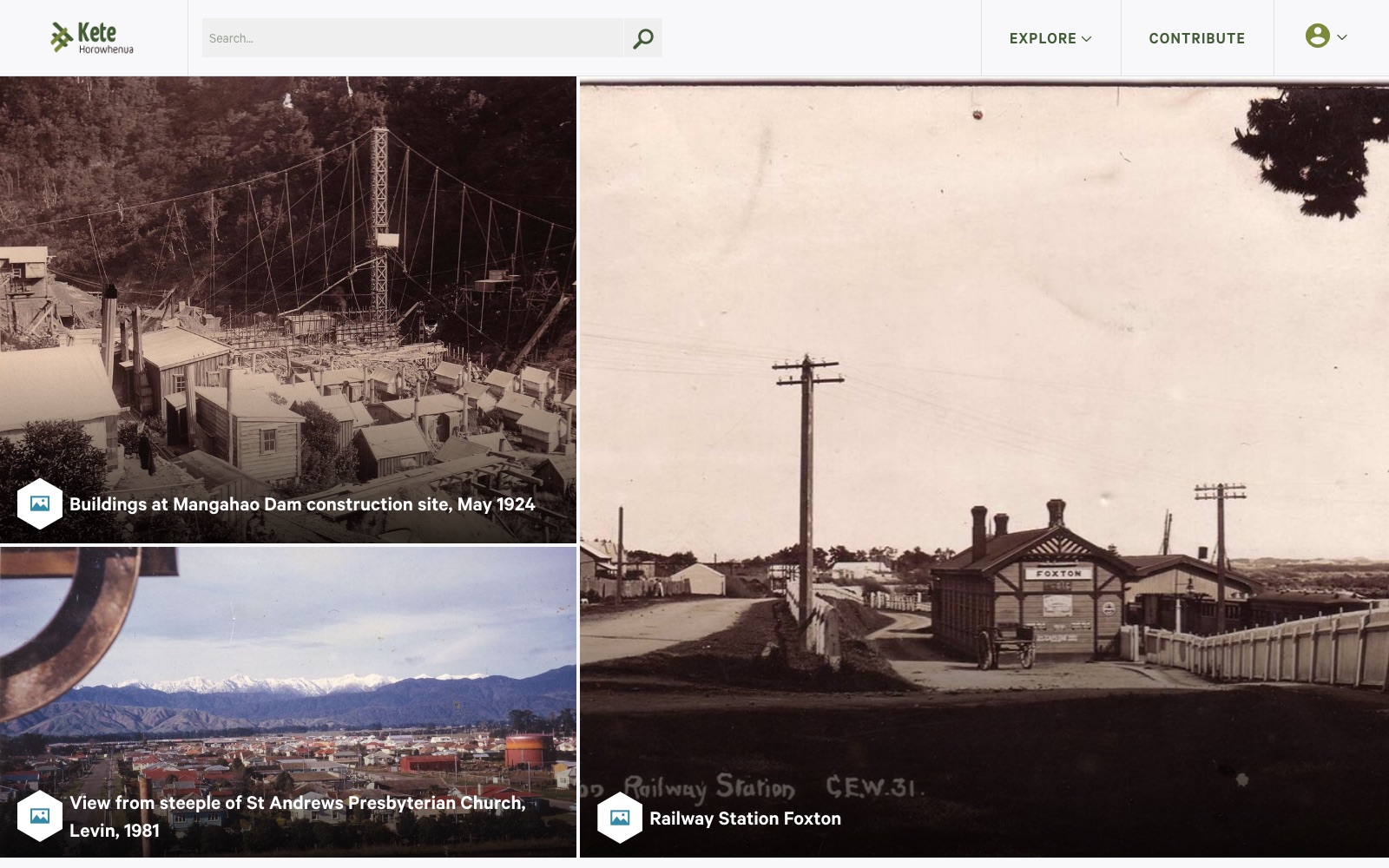
Kete Horowhenua (horowhenua.kete.net.nz) is Horowhenua District Council's community archive. It started on Kete, an open-source platform, and moved to Collect in 2019. If a prospect mentions Kete, it's a migration we've already done.
Feilding and District Heritage (feildingheritage.nz) is run by Manawatu District Libraries, Palmerston North's neighbours. It looks and works much like Kete Horowhenua, which makes it a good second example for a small council.
The NSW Department of Justice runs a Supreme Court collection on Collect, added in December 2025 alongside their STQRY app.
Friends of Minidoka preserve the history of the Minidoka incarceration camp in Idaho. They bought an app in 2025 and are building their Collect site now, starting with about 300 records.
Sncewips Heritage Museum, of Westbank First Nation in Canada, is also building a site. Don't name them outside STQRY. Their collection holds sensitive community material.
Recollect is the one to take seriously. It's a credible New Zealand product, and Wellington City Council Archives use it. Its features are gated by tier and its storage is capped at 250 GB or 1 TB. Collect has no features held back by plan.
eHive (from Vernon Systems, and behind Te Papa's NZMuseums) and PastPerfect are catalogues for small museums. They're far cheaper than us, from free to about $2,000 a year. They don't give the museum its own branded website the community can add to, and that's what we sell.
Islandora, Omeka and CollectiveAccess are open source. The software is free, but somebody has to host and maintain it. Archives Central's Islandora site is exactly that, and it's why they're talking to us.
"Can some items be for our community only?" Not yet. Indigenous groups in New Zealand, Australia and Canada ask for this more than anything else. Find out exactly what they need to restrict and who should see it, then post it in #product-knowledge on Slack.
"eHive is free." eHive is a catalogue. Collect is the community's own website, with their branding, contributions, fuzzy dates and authority files, and they own all the data.
"$5,000 for setup?" Setup covers configuring their fields, theme and site with them. Importing their records is quoted on its own, because every collection arrives in a different state.
"Can we search inside our PDFs?" Not yet. Collect reads the text from scanned documents, but searching inside PDFs isn't built yet.
Discounts on setup or subscription go through Glen.
Manawatū Heritage. Search for a street or family name, open Contribute, and switch to te reo Māori.
Horowhenua moved from Kete to Collect in 2019. We've done this migration before.
Restricted community access isn't built yet. Find out what they need to restrict and for whom, and post it in #product-knowledge.